Practical guidance from a BCBA: Why doesn’t my autistic child respond to his name?
Published on
August 6, 2026


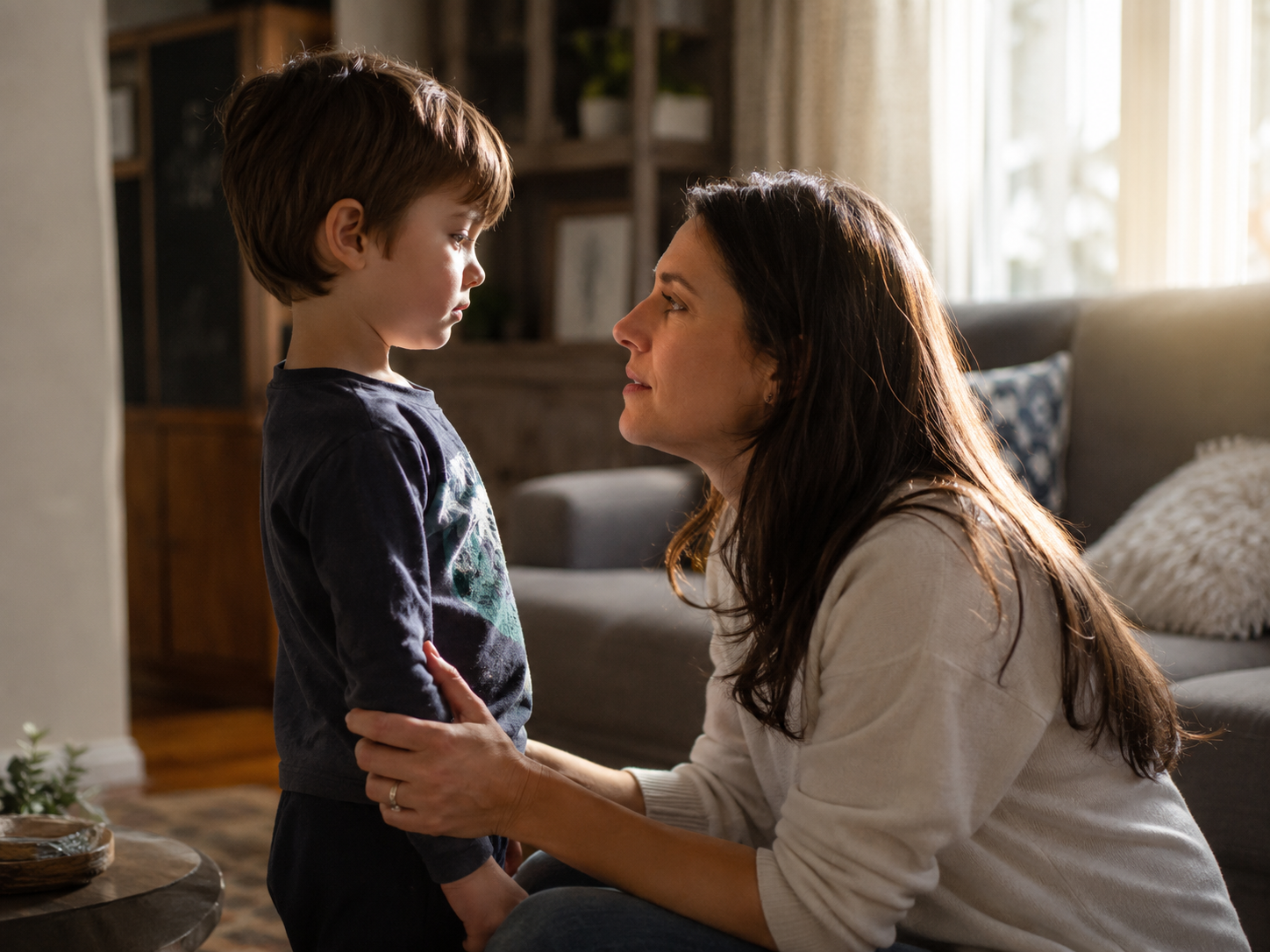
Multiple hearing tests and hours in the waiting room clearly showed that my son is not deaf. Relief quickly gave way to confusion and frustration. Why doesn't my autistic child respond to his name when he can hear? After many unsuccessful attempts to understand why, I reached out to a BCBA who shared the following insights.
By the time we met, I had already given up hope that my son would respond to his name. The first question I threw at the BCBA was, "Is name response really a priority? We are already investing significant resources in other areas of development. Is this the right skill to target now?"
She answered with a strong "Yes! It is a priority!" and emphasized that name response is a basic, functional, and foundational skill that should be taught as early as possible as it affects social development and daily functioning. In general, name response should be a top priority.
With renewed determination to uncover why my son doesn't respond to his name, we began breaking down the skills that neurodivergent children need to respond to their name.
Receptive language skills are a person's ability to understand, process, and react to the language they hear or read. The first step in identifying why your child doesn't respond to their name is determining if they have the skill that connects their name to themselves.
Our name forms a central part of who we are. It shapes how others recognize, address, and emotionally reach us (1).
Our name is the verbal signal that says, you matter, you are seen, this is for you.
In this way, our names are more than just a label (like a rose, turkey, or shoehorn) — it's our identity and connection in the social world. That's why we recognize our name within 300–500 milliseconds even in a noisy room! (2)
Some neurodivergent children do not recognize that their name refers to them. They haven't connected their name and themselves. Hearing their name may feel as random as hearing "The ice cream truck is here!"
To illustrate:
"Ben, dinner time."
Ben "ignores" you because he doesn't understand that you are addressing him.
A typical response sequence:
For most people, this sequence usually takes 1–2 seconds. We don't need to be taught how to respond, it's a natural reaction that takes no thought or practice. However, for some neurodivergent children, knowing how to respond when they hear their name is a skill that requires explicit teaching and practice.
The scenario may look like this:
"Ben, dinner time."
Ben understands you are talking to him but "ignores" you because he doesn't know that he is supposed to say, "Okay Mom, I'm coming."
Our children's names are often paired with demands or tasks. Some neurodivergent children quickly learn that their name means something unpleasant, and they form a negative association. Even if a child with ASD connects to his name, and knows how to respond, he may still ignore it, because he associates it with unpleasant demands.
For example:
"Ben, dinner time."
Ben "ignores" you because he has already learned to "tune out" when he hears his name.
If your child frequently resists or refuses requests, they might not respond to their name even if they have all necessary skills.
To illustrate:
"Ben, dinner time."
Ben realizes you are talking to him, and knows he should say, "Okay Mom, I'm coming," but he ignores you simply because he's non-compliant.
To understand why your child does not respond to his name you must:
1. Show your child a photo of themself and say "Who's this?" Observe how they respond. Does he say "That's me," "That's Ben," or does he seem unsure?
This reveals whether your child understands that his name means him.
2. Point to yourself and say, "Mom" and then "yes". Then point to him and say "Ben". Again, observe his reaction. Does he say "yes" or does he look confused?
This helps reveal if your child knows how to respond or not. (It also indicates if he identifies with his name.)
3. Stand in his line of vision holding a preferred item or treat and say, "Ben, I have a treat for you." Watch his response. Does he answer you, or does he look unsure of what to do?
This suggests whether your child has a negative association with his name. (It will also indicate if he knows how to respond to his name.)
(Of course, do not "diagnose" your child without consulting a professional.)
When a child hears his name, they should quickly orient and respond to it. It should become an automatic, natural reaction. For this reason, it's essential to positively pair your child's name even if no negative association exists.
Here's how to create positive associations with your child's name:
Do: "Ben come see, your favorite dog is outside!"
Don't: "Ben, put your shoes away!"
Below are two games you can play to help your child identify with his name.
The mirror game — Hold a mirror in front of your child, smile and say his name. You can tap his shoulder or squeeze his arm and say, "I'm tapping Ben's shoulder" or "I'm squeezing Ben's arm." Reward any sign of recognition.
The pointing game — Point to yourself and say, "Mom". Then point to your child and say his name. Take turns pointing at each other and saying that person's name. Reward successful responses. You can also create a points system to earn a reward.
Below are two games you can play to help teach your child how to respond.
Catch — Hold the ball and say your child's name. When he catches it, he should say, "yes" or "what". Then have your child throw you the ball and say your name, and you respond with "yes" or "what". Reward your child after a set number of responses.
Voice changer — Take turns calling each other's name and answering "yes" or "what" in different voices. You can choose a loud voice, a quiet voice, a squeaky voice, a monster voice, a hoarse voice, a deep voice.
When integrating a new skill into a real-life environment, use prompts to guide responses.
For example: You say, "Ben." Ben hesitates. You prompt in a whisper "Yes, Mom." Ben understands what to do and answers, "Yes, Mom."

Name response is a foundational skill that should be taught as early as possible. It is a skill that may not develop naturally in neurodivergent children. To understand why your child doesn’t respond to their name, you must identify if:
Your child isn't necessarily ignoring you intentionally. They are reacting based on their skill level. Games and prompts help coach your child in developing new skills.
As it turns out, my son doesn’t know how to respond to his name. All this time, he heard me calling, he knew I was talking to him, but simply didn’t know how to respond. Now that we've uncovered the missing skill, it’s just a matter of determination, positivity, and time.
(1) Leary, M.R., & Tangney, J.P. (Eds.). (2012). Handbook of Self and Identity. Guilford Press.
(2) Moray, N. (1959). Attention in Dichotic Listening: Affective Cues and the Influence of Instructions.
(3) Toshiki Nakane, Makoto Miyakoshi, Toshiharu Nakai, Shinji Naganawa, How the Non-attending Brain Hears Its Owner's Name, Cerebral Cortex, Volume 26, Issue 10, October 2016, Pages 3889–3904, https://doi.org/10.1093/cercor/bhv184