When Summer Doesn't Feel Like a Break
Published on
May 27, 2026


For many families, summer means slowing down. For autism families, it can feel like the opposite.School ends. Therapy schedules change. Bedtimes drift later. Vacations, family visits, and endless unstructured hours replace the routines ASD kids rely on.
But I, a self appointed ASD expert, researched camps and day trips obsessively. I made daily schedules, printed behavior charts, packed "boredom boxes," and talked my son through exactly what summer would look like. I thought I had it in the bag.
I didn’t.
Everyone was home all at once. Hungry, bored, fighting. My son was overstimulated, understimulated, and melting down constantly. Throw in my ADHD toddler flooding the kitchen sink and painting my walls with ketchup for the perfect descent into chaos.
Getting out of the house took half the morning. Camp? Couldn't get him through the door. Cottage weekends? The water was too cold, the cousins were too loud, and he sat there like an iPad potato while we printed out nature hunts he couldn’t care less for.
It felt like a catch 22. When I planned too much, everyone was overwhelmed. When I planned too little, the lack of structure backfired.
Last spring, while trying to convince my son to attend yet another STEM camp, I had a realization. I wasn't planning summer around what my child actually enjoyed. I was planning it around what I thought summer was supposed to look like.
Maybe my son didn't need camp, crowded outings, and nonstop activities. Maybe we all needed a rhythm that felt calmer, simpler, and more manageable for our family.
That shift changed everything.
Not every day became a walk in the park, pun intended, but it took a lot of the stress out of summer. Here are a few things that helped.
Not every autistic child will tolerate a traditional day camp environment, and honestly, that’s okay. Mine went once and enjoyed it, yet wasn’t down to try again this time.
Some kids thrive with:
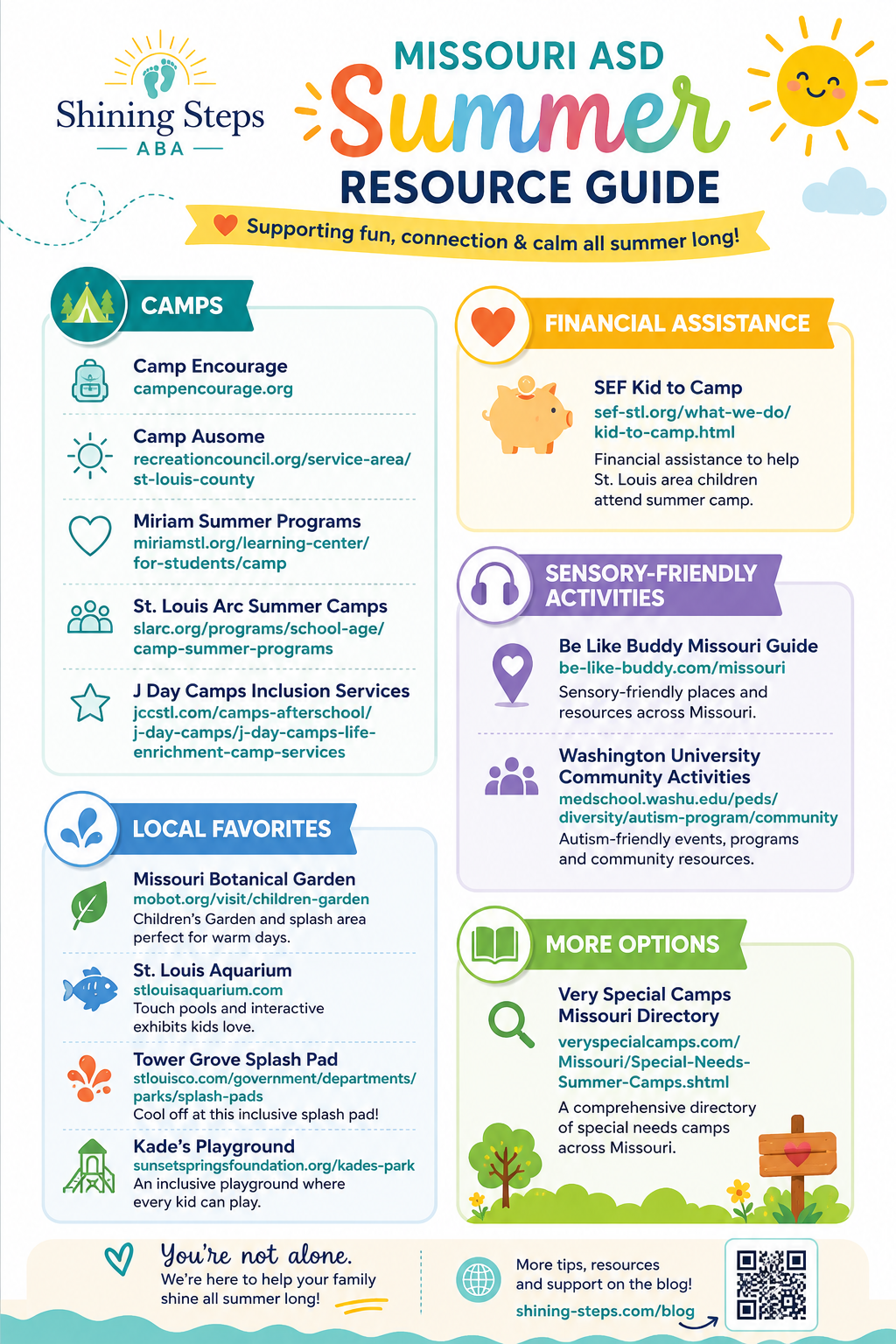
But if your child is open and willing- Missouri has a number of adaptive camps, YMCA inclusion programs and sensory friendly recreation centers that may be a good fit. Resources like Camp Encourage and KVC Missouri Autism Summer Camp are great starting points for parents looking for more supportive summer options.
And if your child refuses camp altogether? Encourage, but don’t push. Some kids simply regulate better with shorter outings and more recovery time at home.
Local ASD parents in my support groups love these options below…
Parents in Kansas City also recommend sensory friendly trampoline sessions and adaptive recreation events specifically designed for neurodivergent kids.
Check out Be Like Buddy Sensory Friendly Missouri Guide and Washington University Autism Community Activities List to find more ASD friendly activities and spaces.
This was one of the biggest game changers for us.
I stopped trying to fill every hour and focused instead on creating a predictable rhythm to the day. Some days were smoother than others, but taking down the pressure to ‘get out’ or manage multiple activities helped us stay calm.
For our family, that often looked something like:
And honestly? My son was far happier spending part of the day hosing down his toy cars and crushing chalk than being dragged from activity to activity all summer long.
Visual schedules also helped tremendously. I use AI to print a quick picture schedule for each day to give my son more predictability. When planning a bigger outing or family gathering, I prepare my son ahead of time and give options for overload moments.
Checking in with my son regularly helps me recognize patterns and avoid meltdowns.
Asking for support is the hardest, but often the biggest gamechanger.
The best support rarely came from an overpriced camp or perfectly planned activity. Sometimes it was simply having another safe adult step in when I was touched out.
For working parents or overwhelmed caregivers, hiring a trusted babysitter, support worker, or "shadow" for even one afternoon a week can make a huge difference. Websites like Care.com, Sittercity, local ASD Facebook groups, or asking friends are a good place to begin.
Have them take your child on a preferred outing, library trip, splash pad visit, or sensory activity while you:
I went through quite a few sitters before finding the ones who clicked with my son, but once I found the right help- I held on for dear life.
Sometimes the support you need isn't a grand solution. It's just enough help to get through the day without burning out.
I started noticing how frustrated my other kids became when our outings revolved around their brother's needs. We'd finally get to the pool or park after an hour of packing and pep talks, only to leave twenty minutes later because he was overwhelmed.
The other kids had a long year too.
While so much of our energy goes toward supporting the "high needs" child, siblings still want summer to feel exciting and special in their own way.
Sometimes they need:
One thing that helped me tremendously was scheduling small pockets of one on one connection with each child. Twenty minutes of reading together. Baking brownies. A board game. A quick Starbucks run.
It doesn't have to be elaborate to make them feel seen.
Research suggests autistic children are more vulnerable to regression during long routine disruptions. But summer does not have to become a free fall into chaos.
Successful summers require flexibility from everyone involved.
Your ASD child may need to stretch a little when the family chooses an activity outside their comfort zone. Siblings may need patience and understanding in return.
That might mean bringing headphones, planning breaks, or keeping outings shorter so everyone gets home before things unravel. The goal isn't to push your child past their limits, but to help them tolerate small doses of discomfort while still feeling supported.
Plan ahead where you can. Lower the pressure. Keep everyone fed. Take care of yourself too. And remember: not every family member needs to be doing the same thing at the same time. Peaceful moments come from realizing everyone may need something a little different and flowing with it.
At Shining Steps ABA, we help families navigate transitions, build routines, and develop skills to make everyday life feel more manageable. Whether your child is preparing for camp, struggling with seasonal change, or simply needs extra support, our family centered team is here to help make summer a little smoother for everyone.