Sensory Activities That Last Longer Than Five Minutes (from experience)
Published on
December 28, 2025


For ASD Toddlers and Preschoolers
“Give him a daily sensory diet.”
“What about an obstacle course?”
My OT meant well. She did not know my kid.
He spent all day doing structured sensory work at therapy. The moment we got home, he was done. I tried everything that looked productive or therapeutic: crafts, exercise challenges, sensory stations. He wanted none of it.
What finally clicked was this. I was trying to recreate therapy instead of incorporating regulation into real life. I was also half present. Setting things up instead of actually being in it with him. Kids feel that disconnect instantly, and then refuse the activity or destroy it. Sometimes both.
Over time, I learned three things that changed everything:
Research supports this. Structured but flexible sensory activities that are meaningful and repeated over time support attention, regulation, and sensory development in young children with ASD [1]. But what matters most is that it fits your kid and that you are part of it.
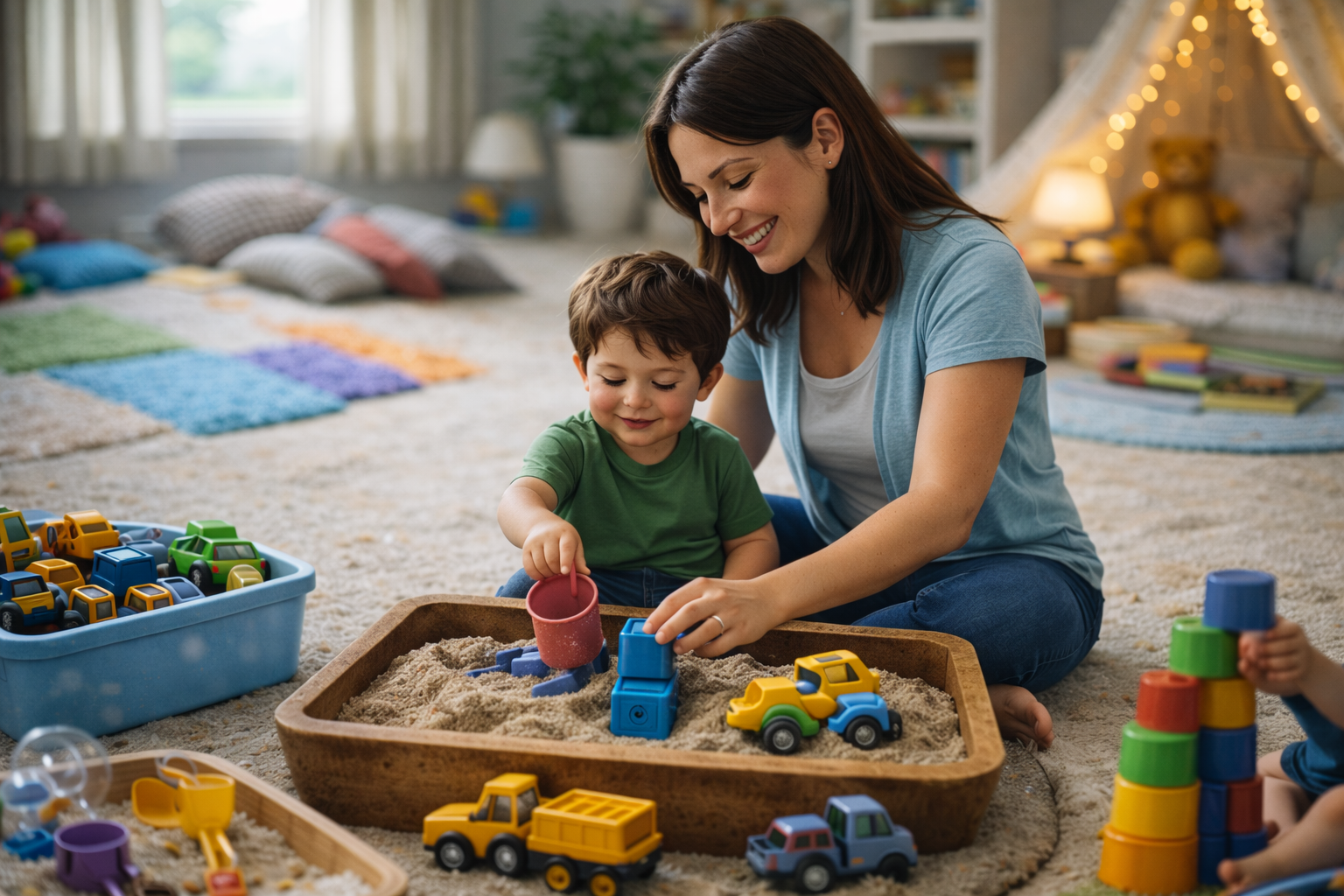
My son loves diggers, trucks, rocks, and anything construction related. A bin of kinetic sand and trucks, with me nearby, will hold him for 30 solid minutes. A watercolor set or box of crayons never stood a chance, unless it involved leaving chewed up pieces all over the house.
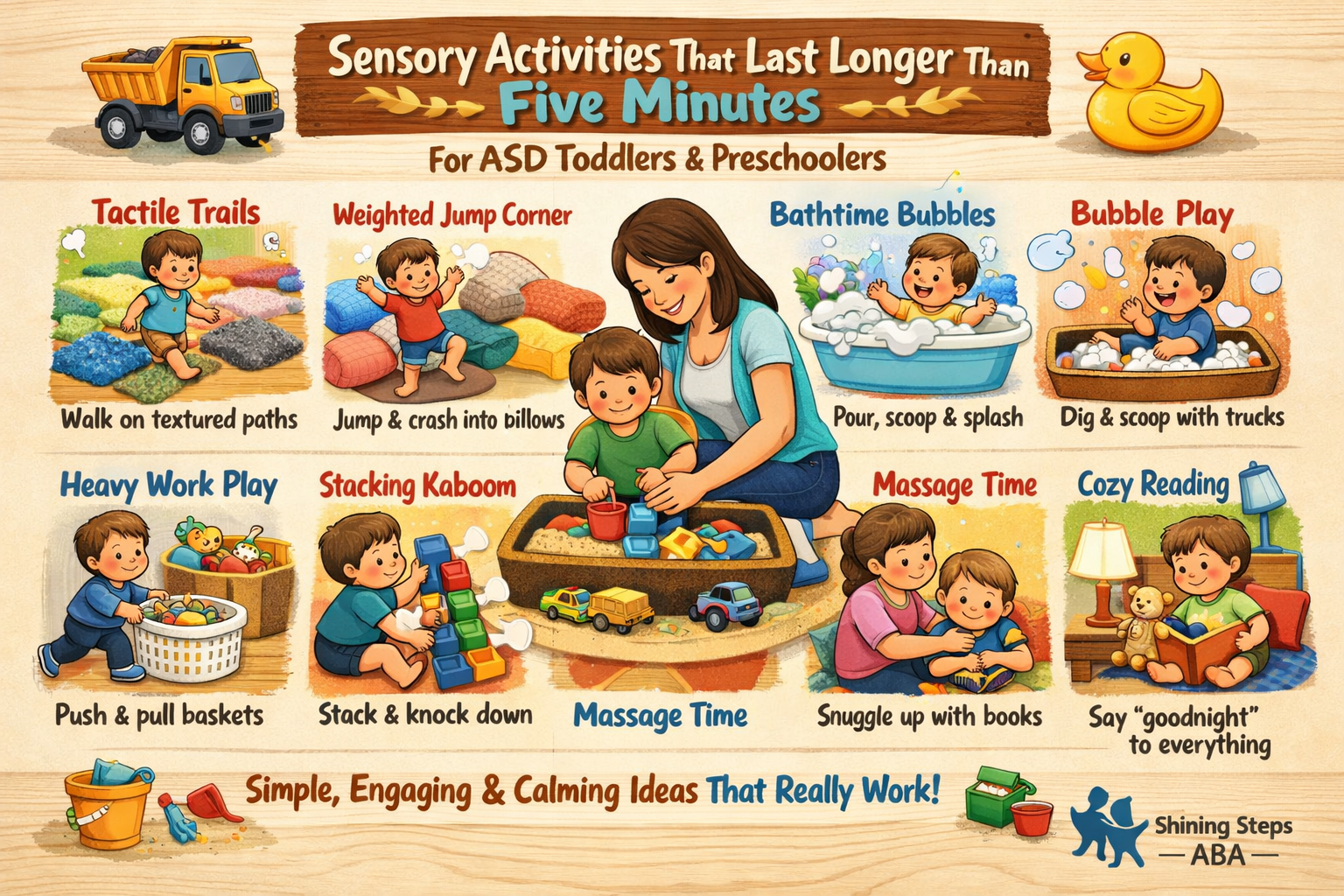
Below are mom-tested sensory activities that can last anywhere from 5 minutes to an hour, depending on your child and the day.
Create a sensory path using household items like foam mats, bubble wrap, sandpaper pieces, textured fabric, fake grass, foam tiles, or cloth scraps. Toddlers can walk, crawl, or tiptoe from one texture to the next at their own pace. I love this cutting board idea!
Why it works: Slow, predictable textures help toddlers feel grounded in their bodies instead of overwhelmed [1].
From my house: My little guy loves ripping, cutting, and testing what objects can do. I let him explore within reason and always involve him in cleanup. Cleanup counts as sensory input too.
Set up a jump corner with pillows, blankets, bean bags, and balls of different sizes and textures. If your child enjoys deep pressure, add weighted items. Play music and let them jump, build pillow piles, or roughhouse with siblings.
Involving the family is a great way to work on social skills and collaborative play. My little guy lives for wrestling with his big brothers.
Why it works: Big body movement gives kids a safe way to burn off energy and feel more settled afterward [2].
Safety note: Watch for overstimulation. Aggression or frantic movement usually means it is time to slow down.
3. Bathtime Bubbles and Buckets (20 minutes to 1 hour)
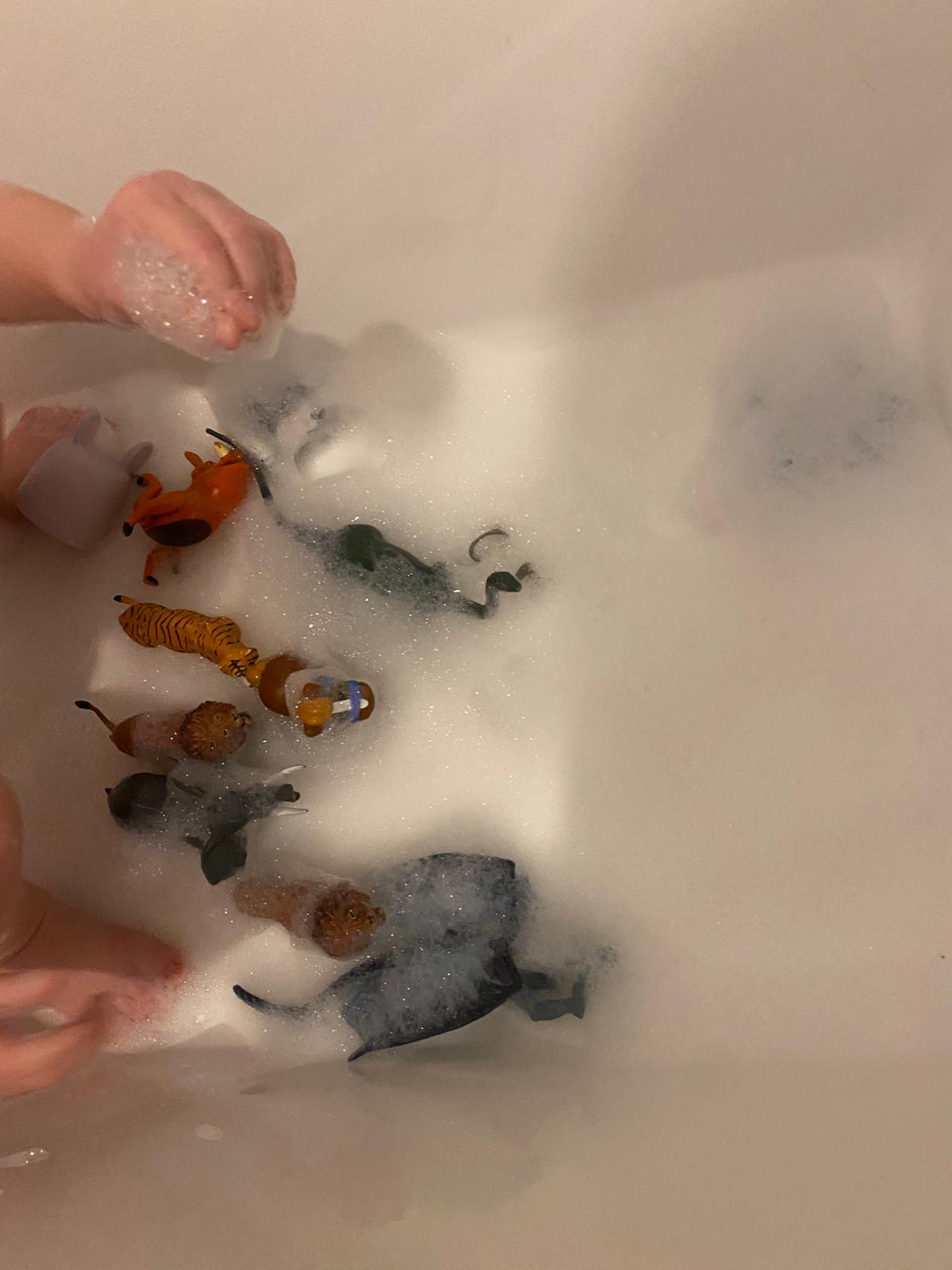
Fill the tub with warm water and bubbles. Add cups, spoons, straws, buckets, little colanders, and a separate bin of favorite toys. Rotate items daily to keep interest high.
Some days my son pours water back and forth with measuring cups for ages. Other days he lines dinosaurs along the tub edge with intense focus. He has also had fun chewing foam toys and distributing the pieces into cups and bowls. I know. I know.
Why it works: Water play holds attention without demands and helps kids regulate without pressure [3].
Dim the lights, play calming music, and use a bubble machine or bubble wrap mat. Dance, stomp, and pop as many bubbles as you can before the song ends.
Why it works: Watching bubbles gives the brain something gentle to focus on while the body keeps moving [3].
Fill bins with rice, chickpeas, pasta, shredded paper, stones, or magic sand. Add scoops, tongs, and cups. You can also use real sand or soil with trucks and diggers.
My guy can play with kinetic sand forever. It is soft, not sticky, and comes in bright colors that do not get stuck when he smushes it all over his hair. You can also make toddler safe slime or playdough together for extra tactile input.
If your child mouths objects, use egg-free cookie dough instead.
Why it works: Repetitive scooping and pouring keeps hands busy and helps kids stay engaged longer [1].
Load a laundry basket, kiddie cart, or mini suitcase with toys or groceries. Push it around the house, crash it into things for fun, or play sibling tug of war with a scarf or rope.
Why it works: Pushing and pulling helps kids feel more organized and less emotionally reactive [2].
Stack cups, cans, blocks, or toys. Tissue boxes, toilet paper rolls, or muffin cups work great too. Build together, then knock them down with an exaggerated “KABOOM!”
My little guy could do this all day.
Why it works: Simple cause and effect play builds focus, communication, problem solving, and confidence [4]. Also, smashing things is both therapeutic and fun.
If your child enjoys touch, try gentle massage with lotion. Start with hands, then move to arms, legs, or back. Pour some into their hands and help them rub it in if the sensation feels uncomfortable. Name body parts and add kisses or tickles. It may take time to discover your child’s preferred mode of touch. Gentle pounding on the back or sides is my little guy’s favorite.
Why it works: Calm, predictable touch can help kids settle and reconnect when they are open to it [5].
Create a cozy space with cushions and preselected books. Include favorites and one new option. Read at the same time daily and add voices, sounds, and pointing- which gives them a chance to interact and link pictures to words.
My son has a three-book rotation. I stopped fighting it but still sneak a new one into the lineup now and then.
Why it works: Familiarity and routine lower resistance and make connection easier [6].
Before bed, I hold my little guy’s hand and walk around each room saying goodnight to favorite objects, siblings, pictures, and spaces. Seems a little over the top? Maybe, but it calms him down and is super cute to watch.
Why it works: Clear, predictable transitions help kids settle and feel ready for sleep [6].
Open-ended afternoons sound lovely in theory. In reality, they can be some of the hardest parts of the day for ASD families.
After daycare or therapy, kids are tired. Their nervous systems are maxed out. When time suddenly becomes unstructured, it can feel scary and exhausting. Meltdowns often show up- not because your kids are trying to be difficult. They simply don’t know what to do next.
Planning does not mean scheduling every minute. It means offering a few predictable options that meet sensory needs and allow connection. When kids know what to expect, they can relax into it. When parents are present, even imperfectly, regulation becomes a shared experience.
Start small. Pick one or two activities and rotate slowly. Follow their interests. Adjust expectations. Some days last five minutes, others an hour- both count.
There will be noise. There may be chewed toys, sand and water in unexpected places. But there may also be calmer evenings, lots of giggles, and maybe, just maybe, a better night’s sleep.
Stay tuned for a follow up post geared towards preschool and elementary children.
Looking for ways to support your child’s growth at home? Shining Steps ABA offers personalized, evidence-based strategies to turn overwhelming moments into opportunities for learning and fun.
References:
[1] Significance of Sensory Activities among Toddlers for Sensory Skills Development, ResearchGate.
[2] Heavy Work Activities for Kids with Autism, The OT Toolbox.
[3] Water Play Benefits, Behavioral Innovations.
[4] Stacking and Nesting Toys for Development, ARK Therapeutic.
[5] Massage Therapy for Children with Autism, PMC.
[6] Improving Literacy Skills for Children on the Spectrum, Autism Awareness.